Why do some quad rentals need a screening call before they'll confirm the booking?
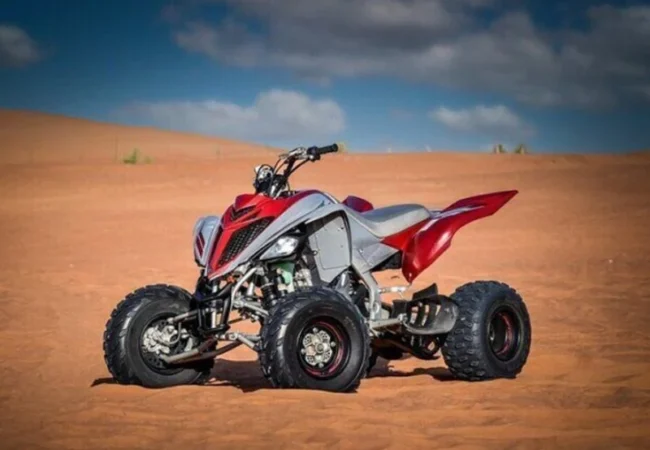
The Raptor 700cc and the 625cc sports quad both require a quick conversation about your riding history before the rental is confirmed. Every other machine on the fleet books straight through, no screening involved.
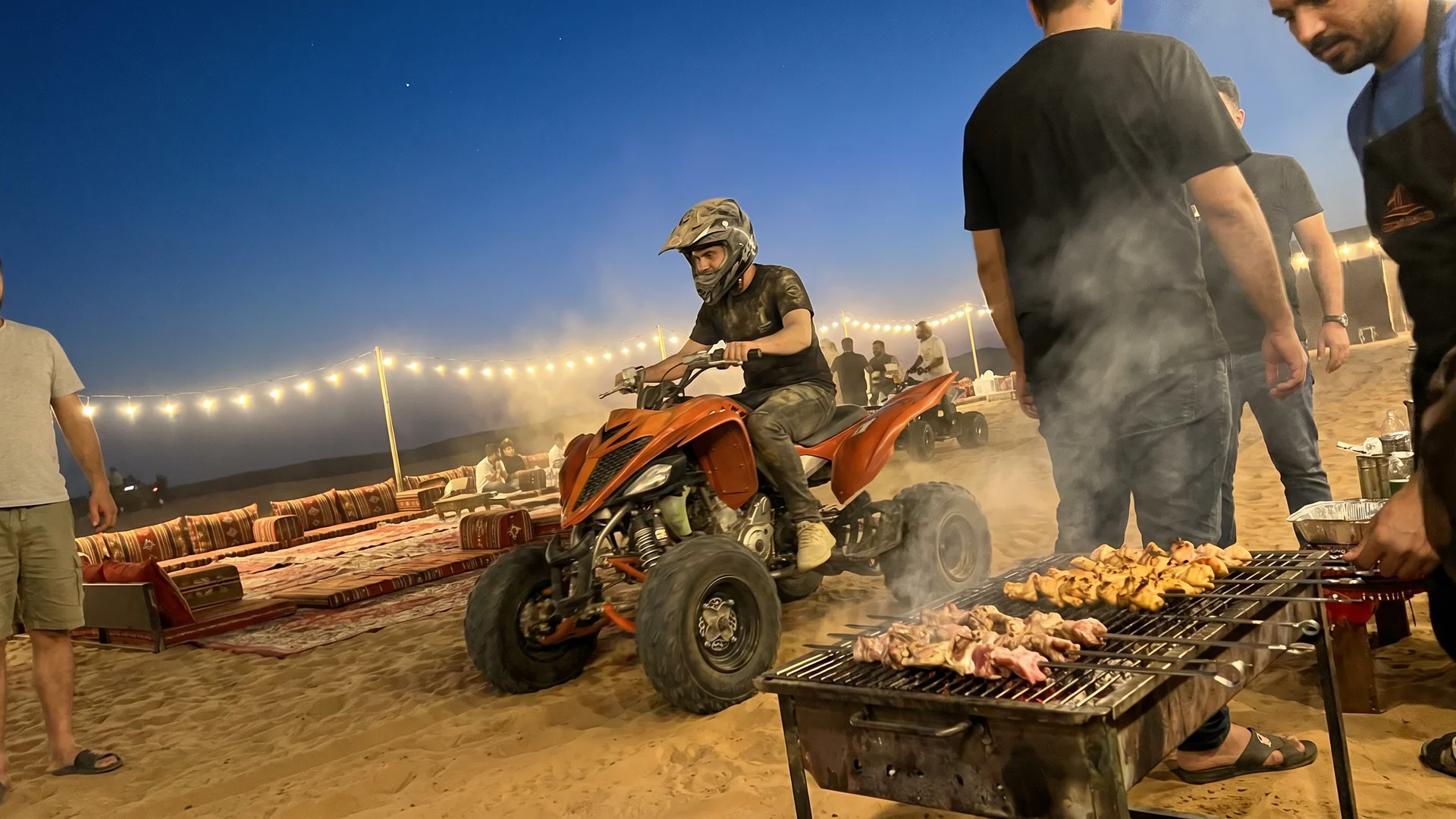
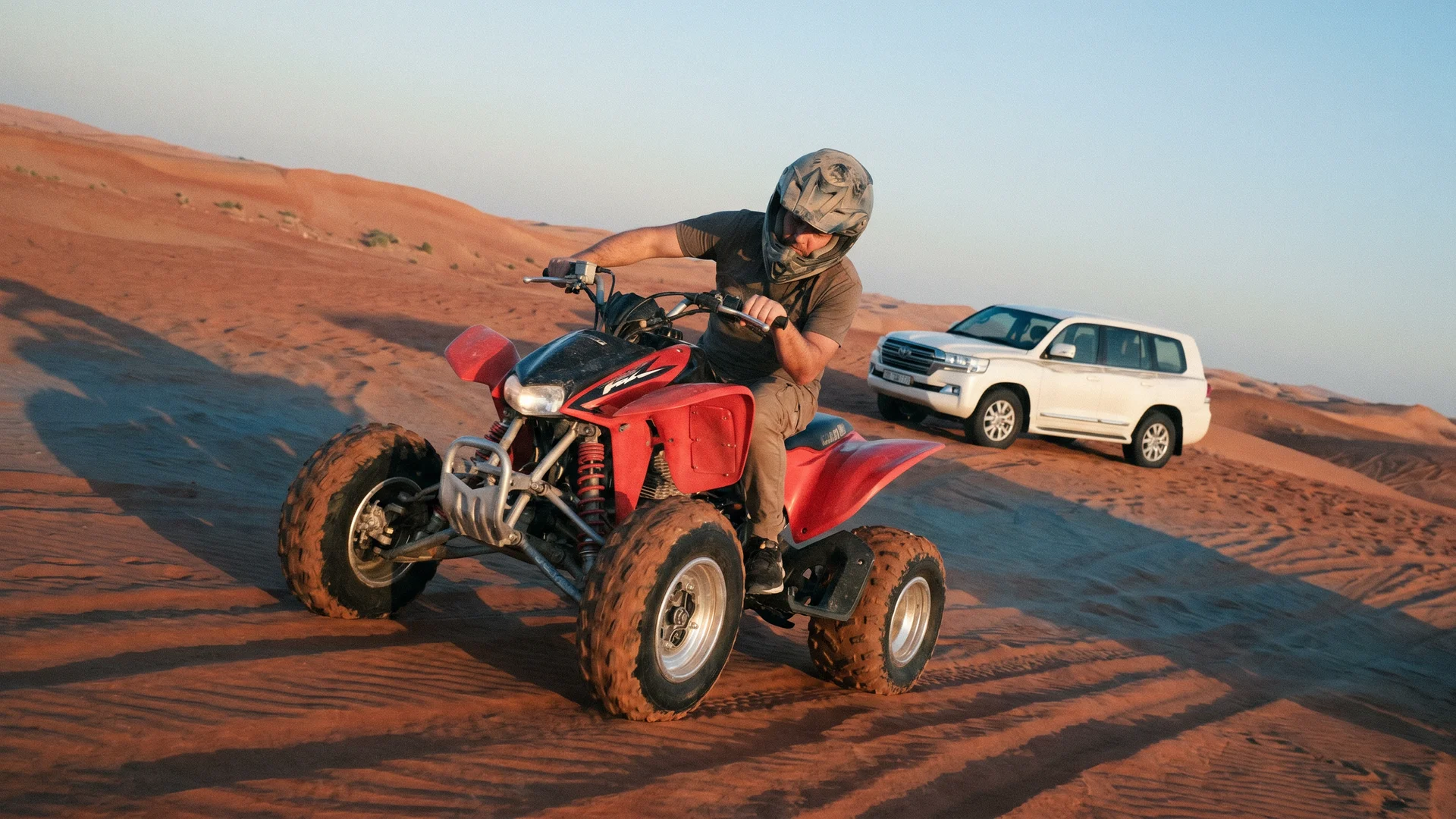
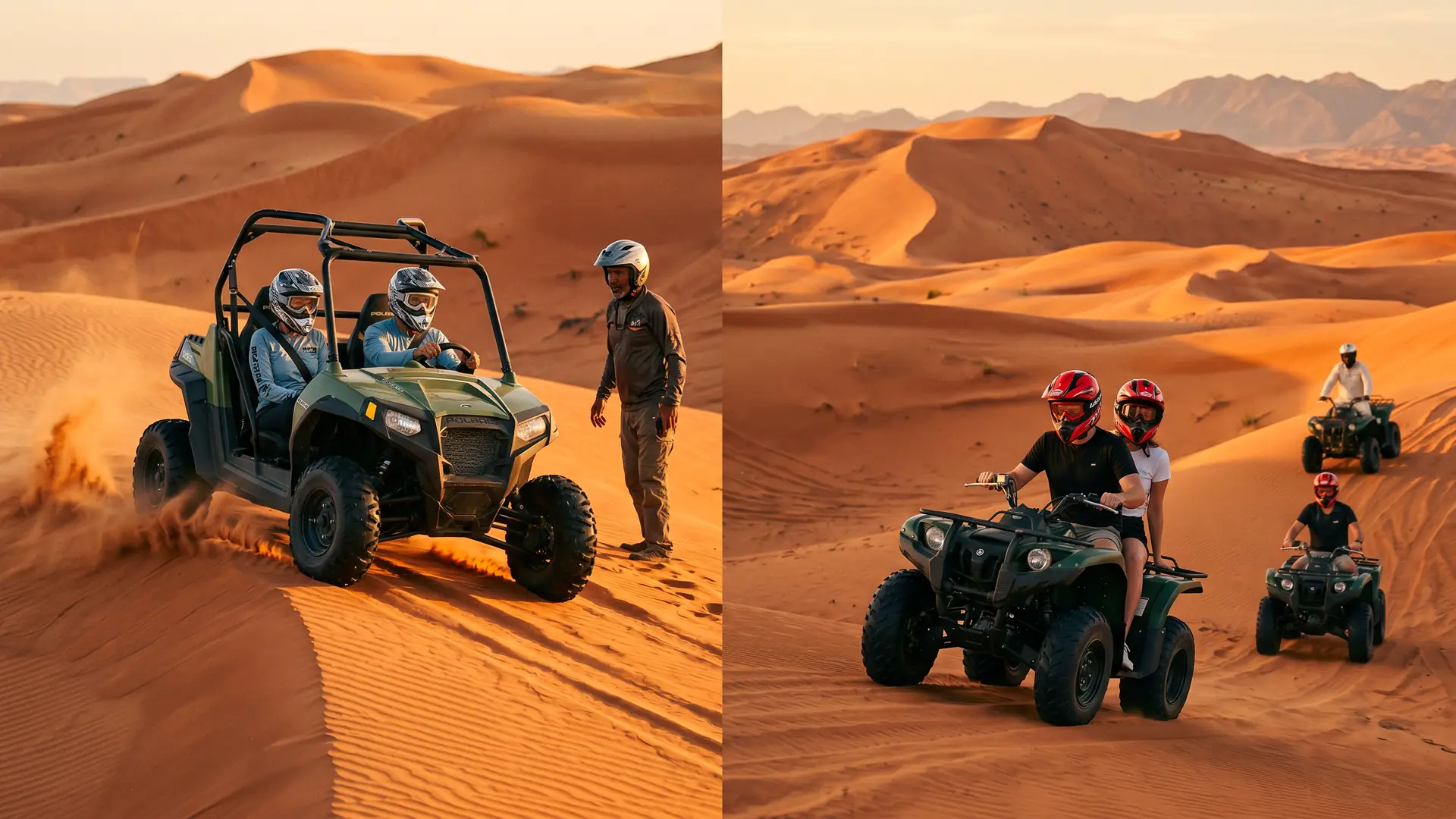
Screening isn't a sales tactic and it isn't universal. Out of eight machines, exactly two trigger it: the Raptor 700cc and the 625cc sports quad, both built for riders who already know how to manage power and body position on sand. The rest of the fleet, from the 90cc kids rental up through the 400cc, rents the same way any other activity on this page does. You pick it, you pay, you ride.
What the call actually covers is short: whether you've ridden a quad or something similar before, how recently, and how comfortable you are with a machine that responds fast to throttle input. There's no test, no certificate required, just an honest conversation. Answer it straight and it takes two minutes. Oversell your experience and the guide finds out anyway during the warm-up, which is a worse way to discover it.
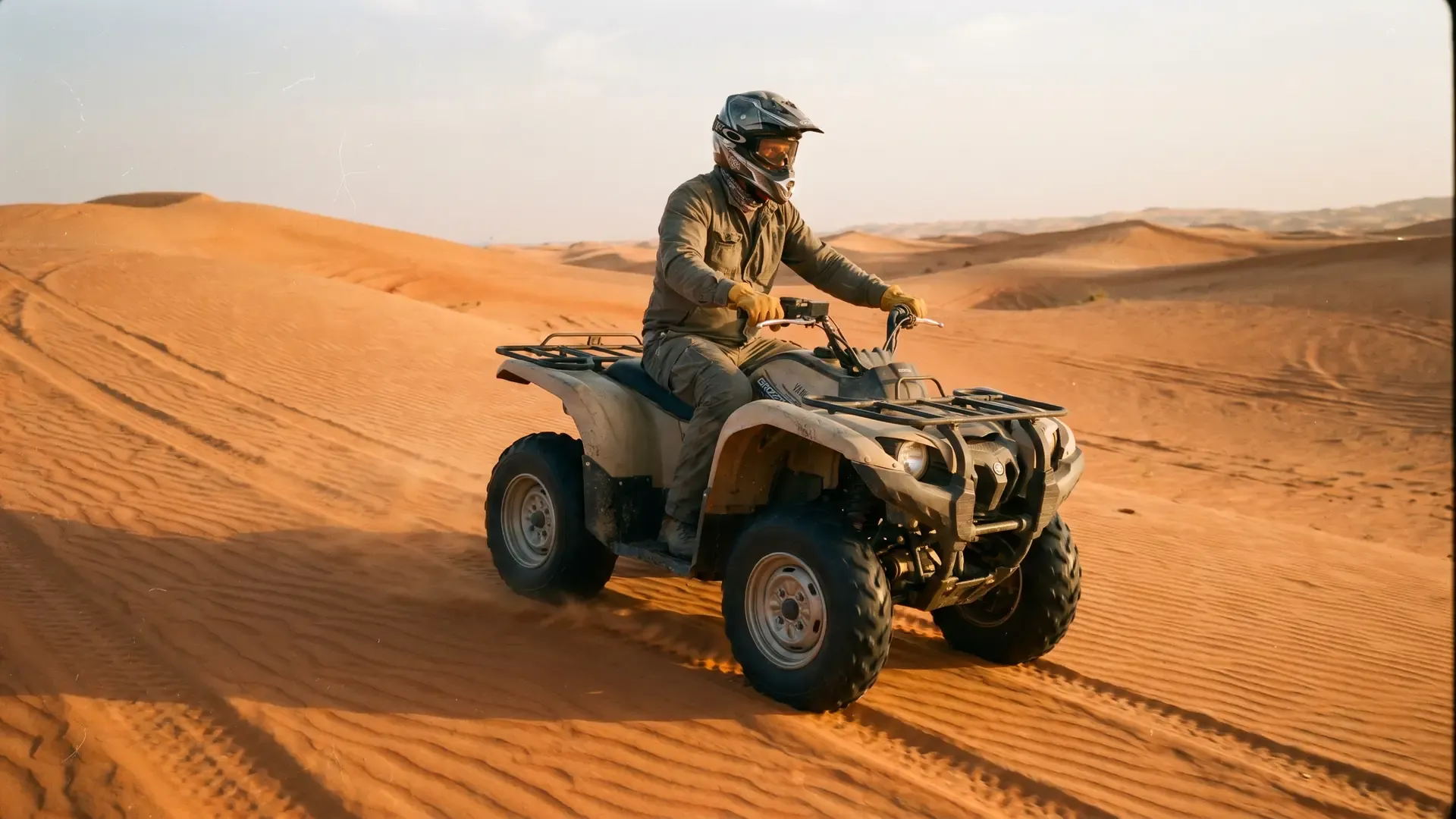
A no from that call doesn't end your booking. It just redirects it. Riders who don't clear the screening for the Raptor are steered toward the 400cc turbo or the Grizzly 450cc instead, both of which still deliver more power than the standard 400cc without the same margin for error. Nobody gets turned away from the base empty-handed over this.
None of this applies to the kids' 90cc rental either, which sits at the opposite end of the fleet from a screening conversation. That machine is capped for supervised track use specifically so no judgment call about rider experience is needed at all.
The honest reason this exists: a quad with genuine top-end speed punishes a bad decision faster than a beginner machine does, and a DTCM-licensed operator running this many sessions a week has seen what happens when that gets skipped. It costs the operator nothing to ask the question upfront, and it's cheaper than a recovery call later. Full context on which machine suits which rider sits in before you pick above.
What actually separates the kids' 90cc rental from an adult rental, beyond engine size?
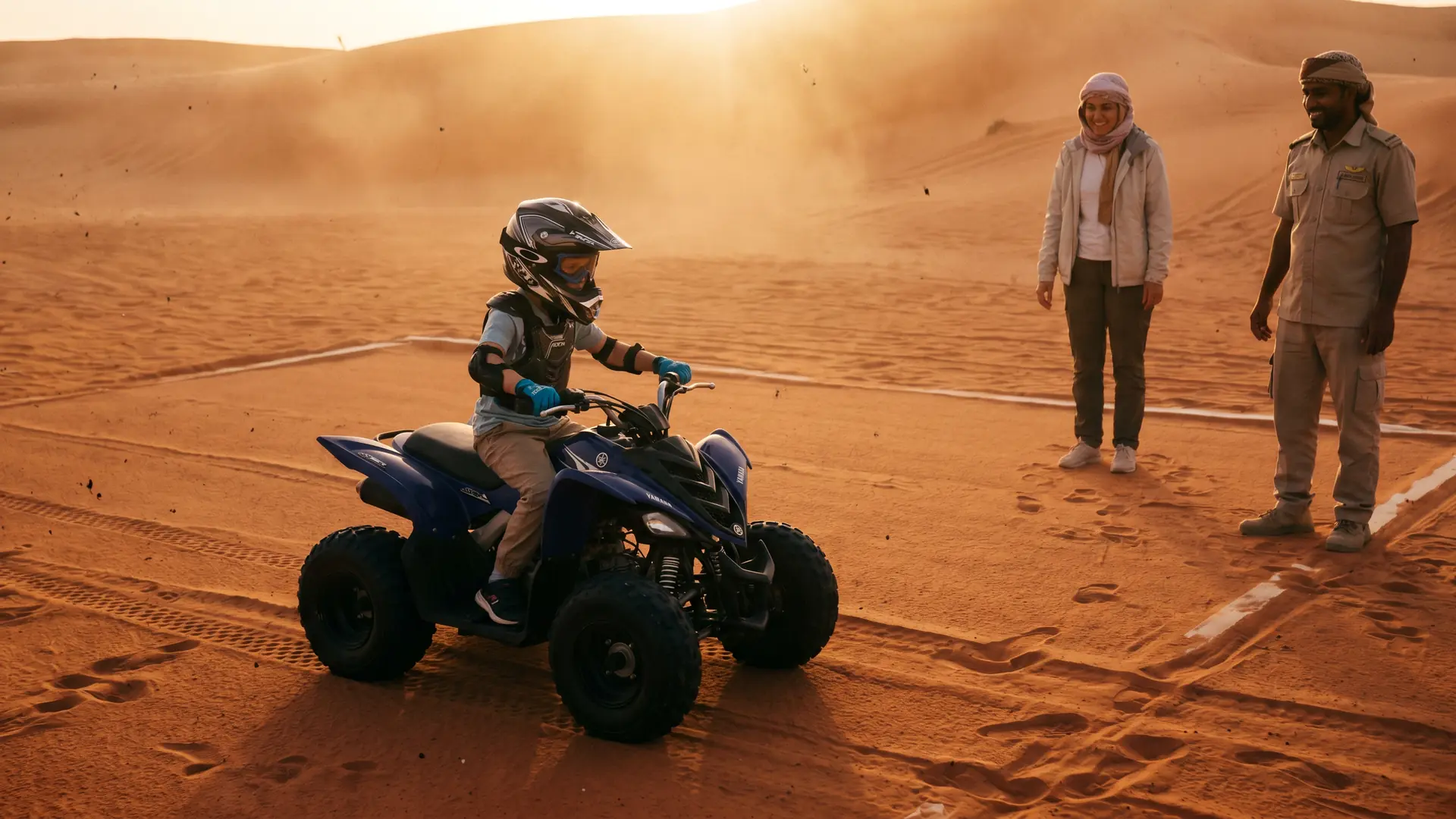
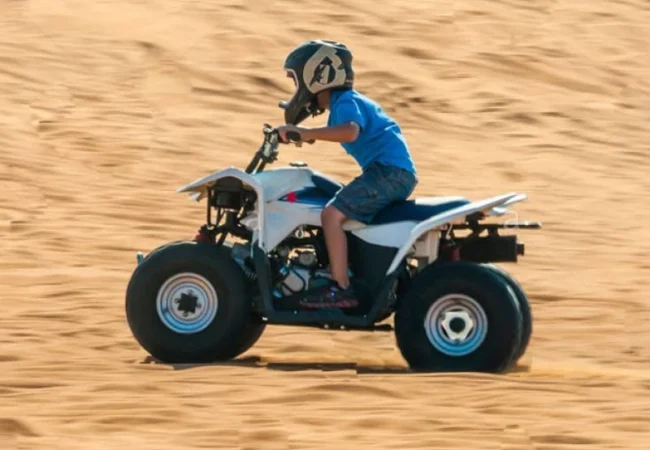
It isn't just a smaller machine. The 90cc rental runs on its own marked track rather than the open dunes, requires a guardian on site for the whole session, and is priced and booked as a completely separate product from the adult fleet.
It's tempting to think of the 90cc as simply the small option on a size chart, the same rental as the rest of the fleet scaled down. It isn't structured that way at all. The adult machines, from the 220cc up to the Raptor, all run the same open-dune route with a lead guide setting the pace for the group. The 90cc runs on a separate, marked circuit that never touches the open dunes.
The supervision model is different too. Adult rentals get a briefing, a warm-up, and a guide who watches the group from the front. The kids' rental requires a guardian to remain on site for the entire session, not just drop the child off and collect them later. That's a booking requirement, not a suggestion, and it gets confirmed before the child is put on the machine.
Because it's a genuinely separate product, it also books separately. A family renting three adult machines and one kids' session isn't quoted as one blended package, it's four individual line items confirmed together, each priced on its own terms. That distinction matters if you're comparing this operator's total against a competitor who might be bundling a child's session into a family rate that looks cheaper on the surface but covers less supervision.
One detail that surprises parents: the 90cc rental doesn't include a shortened version of the adult safety briefing, it has its own briefing built for a nine-to-twelve-year-old audience, delivered by the same guides who run the adult sessions. It isn't an afterthought bolted onto the main operation.
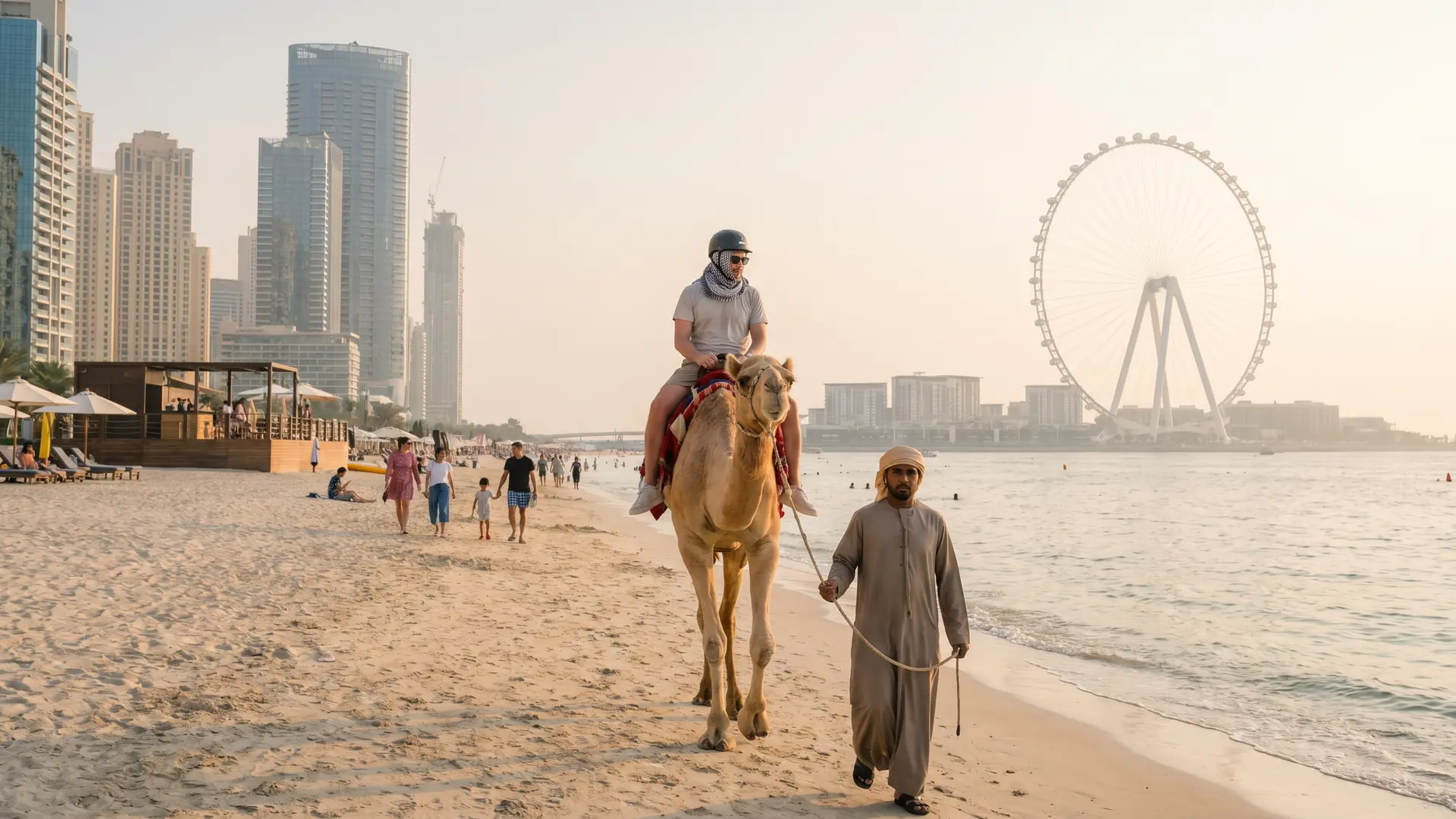
Age nine is the floor for the 90cc rental, and there currently isn't a version of this product for anyone younger. Families with toddlers or very young children typically choose a camel ride instead, covered under camel and horse riding above, which accepts riders from age three alongside an adult.
If two people want to ride together, is that the double rental or two separate rentals?
Only the Yamaha 400cc double actually seats two. Every other machine on the fleet is built for one rider, so riding together on anything else means two separate rentals moving side by side, not sharing a machine.
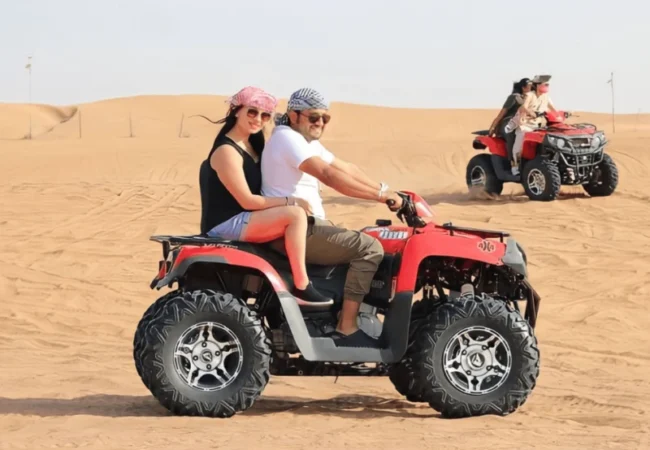
This question comes up constantly from couples and friends who picture riding together as literally being on the same quad, the way you might share a jet ski or a tandem bike. On this fleet, that's only physically possible on one machine: the Yamaha 400cc double, which has an actual two-up seat and rents for AED 350 as a single fee covering both people.
Every other machine, from the 220cc through the Raptor, is built around a single rider and a single set of controls. Two people who each want a 400cc, for example, are renting two separate machines under two separate fees, and riding together means riding side by side behind the same lead guide rather than sharing a bike.
The double solves a specific situation well: one confident rider and one passenger who wants to be out on the dunes without steering anything. It solves a different situation badly. Two people who both want their own throttle should not try to save money by squeezing onto one machine between them, both because it isn't built for that and because a guide won't allow it regardless of what's been agreed beforehand.
Pricing reflects the difference too. A double at AED 350 covers both riders under one fee, while two separate 400cc rentals at AED 250 each add up to more than the double despite putting the same two people on the dunes. If neither of you minds who's driving, the double is very often the cheaper choice as well as the simpler one.
If you're not sure which describes your pair, the honest filter is simple: does the second person want to control a machine, or just be present for the ride? Controlling one means a separate rental. Being present means the double, or a seat in a rented buggy, covered under dune buggies above, is probably the better fit anyway.
Can you upgrade or downgrade your quad rental after you arrive, if the machine turns out wrong?
Yes, within reason. If the 220cc feels too tame or the 400cc feels like more than you expected, telling the guide before you set off usually gets you swapped to a more suitable machine, priced at the difference.
Booking a rental from a price list days in advance is a guess, even an educated one. Nobody actually knows how a specific machine will feel under them until they're sitting on it, and the operator understands that better than most, because it's one of the most common adjustments requested at the base.
The window for this is before you set off, not after you've done a lap. Once the warm-up starts, the guide is already reading how you handle the rental and can redirect your route accordingly, which covers a lot of the same problem without needing a different machine. But if you took the 220cc and it's clearly too slow for someone who rides regularly, or the 400cc feels like more machine than you're ready for, raising it at the counter before you start is the right moment.
Swapping isn't guaranteed, because it depends on what's actually available that session. A quiet Tuesday morning has more spare machines sitting around than a fully booked Saturday evening. Whatever the difference in price between your original rental and the replacement, that's what gets adjusted, either an extra charge or occasionally a partial credit toward add-ons.
Families juggling several machines at once benefit from this the most. A parent who rented the 220cc for a nervous teenager can usually move them down to something even gentler, or the reverse, once everyone's actually standing next to the machines rather than picking off a screen days earlier.
What doesn't get swapped mid-session is the machine tier that required screening. Moving up to the Raptor or the sports quad on the day still means having that same conversation about riding history first, it just happens at the base instead of on WhatsApp beforehand. The full case for matching yourself to a machine before you even arrive is in before you pick above, and getting that right the first time avoids needing this option at all.
Does a quad rental here include any insurance or liability cover?
The rental includes standard operator liability cover as part of every booking. It is not a substitute for personal travel insurance, and riders who want broader medical or belongings cover should arrange that separately before the trip.
Every rental that leaves the base is covered under the operator's own liability policy, which is part of what a DTCM licence actually requires, not an optional extra bolted onto the price. That cover is specifically about the operator's responsibility for running a safe activity: inspected machines, briefed riders, a guide managing the route.
What it isn't is a replacement for your own travel insurance. Medical costs if you're injured, personal belongings lost or damaged during a session, and trip-interruption scenarios are the kind of thing personal travel insurance covers, and this rental's built-in liability cover was never designed to fill that role. Anyone travelling to Dubai specifically for adventure activities should already have that sorted before they land, not after they've booked a quad.
This is worth asking about directly if you have a pre-existing condition, take regular medication, or are travelling under a policy that excludes off-road or adventure activities by default. Some travel policies specifically list ATV or quad riding as an excluded activity unless you've added a rider to the policy, and that's not something this operator's cover can fix retroactively.
For UAE residents booking a rental as a local activity rather than a holiday excursion, the same principle applies in reverse: check whether an existing health or home insurance policy carries any adventure-activity exclusions, since assumptions about being covered are exactly where gaps get discovered at the worst possible time.
The practical move is to check your own policy's activity list before you book, not after something goes wrong. What the operator's cover does guarantee, regardless of your personal policy, is a machine that's been inspected and a guide accountable for the route, both described in full under safety and suitability above.
What happens to the rest of the booking if one rider can't continue mid-session?
The group doesn't stop. A rider who needs to withdraw, for nerves, discomfort or anything else, hands their machine back at the nearest safe point and waits at the base or nearby while the rest of the group finishes.
It happens more often than operators like to admit, and less often than nervous first-timers fear. Someone gets partway through a session, decides the dunes are steeper or the machine faster than expected, and wants to stop. That's a normal outcome, not a failure, and there's a straightforward process for it rather than an awkward improvisation.
The guide brings that rider's machine back to the nearest point it's safe to stop, and the rider waits there or heads back to base while the rest of the group continues the session as planned. Nobody else's rental gets shortened because one person withdrew, and the group isn't made to turn back early on everyone else's account.
Refunds for a partial session aren't automatic, since the machine and the guide's time were already committed for the full booking, but genuine safety concerns, feeling unwell, or a clear mismatch between rider and machine get handled reasonably rather than by the letter of a policy nobody read in advance. This is exactly the kind of situation worth raising honestly rather than pushing through out of embarrassment.
Corporate and larger groups tend to handle this more smoothly than solo bookings expect, mostly because there's already a guide managing multiple riders and machines simultaneously. One person stepping out barely registers logistically against a group of eight or ten, compared with a pair where one person withdrawing changes the whole rest of the booking.
The same logic covers a rider who simply picked the wrong machine for their comfort level rather than a genuine emergency. If the 400cc feels like too much five minutes in, the better move is telling the guide immediately rather than gritting through the rest of a session you're not enjoying. Recovery from getting physically stuck, a different and much more common scenario, is covered separately in the main FAQ above.
How do you know a cheaper quad rental elsewhere isn't missing something this price includes?
Compare what's actually bundled, not just the headline number. This rental includes a helmet, fuel, a pre-ride briefing, a machine check and a lead guide as standard; ask a cheaper quote whether it matches all five before assuming it's the better deal.
A lower number on a comparison site rarely tells the whole story, and quad rentals are an easy category to quietly strip costs out of without changing the advertised price much. The honest way to compare two quotes is to ask what's actually included in each, not just what the headline figure says.
Five things come standard with every rental on this page: a helmet, fuel for the booked duration, a briefing on the controls before you set off, a check of the machine before it's handed over, and a lead guide managing the route for the whole session. A noticeably cheaper quote elsewhere is usually cheaper because one or more of those has been quietly dropped, most often the guide-to-rider ratio or the inspection step, neither of which shows up on a price list.
Group size is the other place quotes get misleading. A per-machine price that looks lower can still work out more expensive than a per-rider price once you're actually booking for four or five people, especially if the cheaper option charges extra for a guide once your group passes a certain size. Working out the real total for your specific group, not the headline single-rider number, is the only honest comparison.
It's also worth asking how a quote handles children or nervous beginners specifically. A cheap headline rate that assumes everyone rides the same machine at the same pace often falls apart the moment your actual group includes a first-timer or a child, at which point the savings disappear into add-ons that should have been priced in from the start.
None of this means the cheapest option is always wrong. Some operators genuinely run leaner. It means the comparison only means something once you know what's actually in the box. A DTCM licence is the baseline worth checking regardless of price, since it's the one thing that can't be quietly substituted out. Where this operator's own pricing breaks down machine by machine sits in the rate table above.
People also search for
Guide FAQ
Do I get a written rental agreement or just a booking confirmation?
A booking confirmation with the price, machine and timing is sent once payment clears, and the rental terms are shared in writing at the same time rather than only announced verbally at the counter.
Can I switch to a different machine after I've already paid for a rental?
Usually, if you ask before the day of the ride. Upgrading from a 220cc to a 400cc, for example, is a quick adjustment on WhatsApp, with any price difference settled before you arrive.
Is fuel included in the rental price, or charged separately?
Included. Every rental covers fuel for the booked duration, and you're not handed a machine on empty or asked to fill it yourself.
What happens if I damage a rental machine badly enough that it can't finish the session?
The guide handles it on the spot and swaps you onto another machine where possible. Serious damage is discussed under the rental terms agreed before payment, not improvised in the sand.
Can I rent a quad without joining a group, just for myself?
Yes. Solo rentals are common and priced at the same per-rider rate as a group booking. You still ride behind the same lead guide as whichever group is out that session.
Do rental prices change between weekday and weekend?
No, the listed rate is the same every day. What changes is availability, since weekends book out faster, not the price on the machine itself.
Is there a maximum rental duration in one booking?
Not a fixed one. Multi-hour and full-day rentals get arranged directly, the same way a shorter custom session would, priced and confirmed before payment.
Can I rent a quad and store my belongings somewhere safe during the ride?
There's a spot at the base to stash bags and change, both before your rental starts and after it wraps up, so you're not riding with a backpack on.
Do you rent quads to tourists without a UAE address?
Yes. Most rentals here are exactly that. A passport is the standard ID for visitors, and nothing tied to a UAE address is required to book.
If I rent a quad and the machine breaks down mid-session, what happens?
You'll be swapped onto a spare machine, or the guide radios back to base for one, and none of it eats into your session time. Mechanical issues are the operator's problem, not the rider's.
 AED 150